
18 Dec 2025
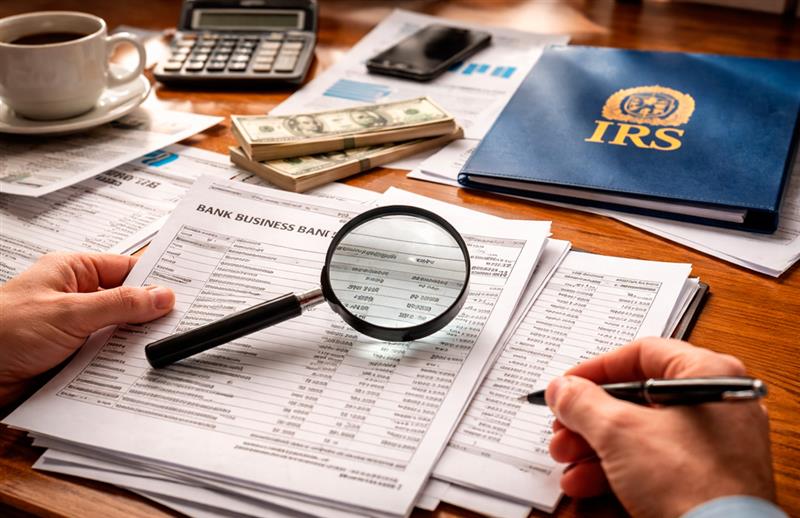
The IRS is requiring more than ever from small business bank statements in 2026. Having better data-matching technology, more extensive tracking of digital payments, and renewed enforcement initiatives have seen bank records become one of the primary tools that the IRS relies on to determine income, expenses, and overall tax compliance.
For small business owners, this means bank statements must clearly support what is reported on the tax return. Even innocent mistakes or ineffective record keeping may lead to questions, delays, or complete audits.
Why Bank Statements Matter More in 2026
Rising IRS Small Business Tax Audits in 2026
The IRS has indicated in public that it is aimed at enhancing compliance among small businesses and self-employed taxpayers. Although the audits are more specific nowadays, the audit of the bank statements is often the starting point of any review conducted by the IRS.
Increased Use of IRS Bank Statement Analysis
Modern IRS systems have the capability to match:
- Reported income
- Bank deposits
- Third-party payment reports (1099-Ks, 1099-NECs)
Any irregularity will trigger an IRS review of business bank accounts.
The Link Between Bank Statements, Income, and Deductions
Your bank statements provide the IRS with a positive financial image of your business. They show how much money came in, where that income originated, how funds were spent, and whether claimed expenses appear legitimate and business-related.
When such information matches your tax filing, then it is an indication of accuracy and adherence to the law. In simple terms, good bank records are the foundation of IRS compliance as they can be used to confirm income and deductions and minimize audit or other punishment risks.
How the IRS Reviews Small Business Bank Statements
The IRS Examination Process (Simplified)
In a review of a small business bank statement, the IRS will normally ask the bank to provide a given time period and then compare the total deposits with the amount of income revealed on your tax filings. They also check withdrawals and expenses to establish whether they are in line with deductions made and the normal course of business.
In the event that anything seems unclear or inconsistent, the IRS can request supportive documents like invoices, receipts, or payroll records as a way of ensuring that the transactions are legitimate and reported correctly.
Routine Review vs Full IRS Audit
An informal audit is an inquiry that is generally of a small scope to seek clarification on a few discrepancies or questions in your filing and does not necessarily imply that your business is under audit. Full IRS audit, in its turn, is a careful review of the bank documents, receipts, and accounting books over a wider range.
Although not all IRS inquiries result in a full audit, the lack of records, slow response, or poorly explained issues can soon turn the small investigation into a larger one.
Matching Bank Statements to Tax Returns
The IRS examines your bank statements to determine the presence of total deposits as stated on your tax report, expenses as compared to the deductions you claimed, and transfers, loans, or owner contributions that are well recorded.
Any discrepancy or lack of explanation may be viewed as a question, and the IRS may demand further records or clarification.
When the IRS Requests Bank Documents
Common triggers include:
- Unusually low reported income
- High deductions compared to revenue
- Inconsistent third-party reports
What the IRS Wants to See in Small Business Bank Statements
Consistent & Verifiable Business Income
The IRS expects business income verification to be straightforward. They look for:
- Deposits that match invoices and sales records
- Clear identification of income sources
- Proper reporting of digital payments
Digital platforms matter in 2026. The amount paid in ACH transfer, Zelle, Stripe, PayPal, Square, etc., should conform to reported revenue. The lack or absence of deposits is a red flag.
Clearly Categorized Business Expenses
The IRS will examine the expenses when reviewing them to determine that they are ordinary and necessary to your business, that they are well categorized, and have valid receipts or invoices. Expense categorization and documentation are essential because bank statements alone do not explain the business purpose of a transaction. You must clearly show why the expense was incurred and how it relates to your business.
Expenses that are commonly reviewed are travel and meals, advertising costs, software subscriptions, and professional services, since these are likely to be misclassified or poorly documented.
Clean Separation of Business vs Personal Accounts
Commingling of funds is one of the most prevalent IRS red flags, and it happens when the business and personal finances are combined. This involves the use of a business account to pay personal bills, placing personal income in business accounts, or combining the payroll transaction with personal expenditure.
The IRS anticipates a distinct arrangement between the payroll, day-to-day business activities, and personal finances. In cases of mixed accounts, the auditing process is more lengthy, risky, and costly as it is more difficult to determine which transactions are actually business-related.
Common IRS Red Flags in Bank Statements (2026 Focus)
The IRS is especially concerned about the following matters in 2026:
- Unreported revenue: Deposits that are greater than reported revenue.
- Big or numerous cash transactions: Particularly unaccounted.
- Round-number costs: Estimates rather than actual costs.
- Inexplainable movements: Among accounts or to third parties.Lack of consistency in balances: Strong cash flow and low reported earnings.
These IRS red flag transactions frequently give rise to more thorough reviews.
Bank Statement Documentation the IRS Expects
It should be accompanied by proper documentation to meet the requirements of the IRS in terms of bank statements. In the process of a review or audit, the IRS might demand invoices and sales receipts to verify the income, expense receipts to justify deductions, payroll records to justify wages and taxes, and loan or lease agreements to clarify transfers and recurring payments.
Generally, companies ought to ensure that such records are held for at least three to seven years according to the conditions. Missing documentation or a missing aspect of documentation may result in deductions or adjustments being denied on the basis of legitimate expense, even when the expense was valid.
How to Organize Bank Statements for an IRS Audit
Step-by-Step Organization Process
- Separate business and personal accounts
- Organize statements by month and year
- Match deposits to income records
- Match expenses to receipts
- Reconcile balances monthly
Monthly Bank Reconciliations
Bank reconciliations also indicate to the IRS that your records are up to date and are maintained, not due to the audit time.
Digital vs Paper Records
In 2026, it is preferred that digital systems be used, but records must be:
- Clear
- Searchable
- Consistently labeled
Audit risk is greatly minimized when professional bookkeeping software is used.
IRS Bank Statement Rules for Deductions & Expenses
Some of the deductions will be subject to the additional examinations of the IRS, such as travel and meals, home office, contractor, and freelancer expenses, and car-related expenses. In case of such deductions, the IRS will insist on the clear purpose of the business, the appropriate receipts, and the appropriate classification.
To prevent complications, all your tax deduction paperwork should be able to clearly indicate the amounts shown in your bank accounts, proving that all the expenses are justified and are being accounted for.
How to Reduce IRS Audit Risk Using Proper Bank Records
IRS Audit Triggers You Can Control
Some of the main triggers of IRS audits are erroneous reporting of income, weak record-keeping, and unavailable reconciliation. It will be hard to prove your financial information, and it can put you at great risk of an audit, along with possible adjustments or fines.
Best Practices for Compliance
Regular reconciliation of monthly accounts, maintenance of digital records in an organized manner, adherence to a similar classification of expenses, and a professional review of the statements before filing should all be taken in order to minimize IRS audit risk. Well-maintained bank records are a powerful and strong audit protection that is evidence of proper reporting and compliance, rather than paperwork as audit compliance.
Bank Statement Audit Tips for Small Businesses
Quick-win tips:
One way to reduce the audit risk of the IRS is to ensure that expenses are never estimated but always documented using receipts or invoices. Label all transfers clearly to show the purpose, and also use cash only where feasible, since it is more difficult to trace. Reconcile your accounts monthly so that you are always sure of the accuracy, and look over your bank statements before you submit tax returns in order to identify any inconsistencies or errors.
Common Mistakes to Avoid That Increase IRS Audit Risk:
- Mixing personal and business accounts.
- Overlooking small discrepancies in deposits or expenses.
- Waiting until an audit to record transactions accurately
These customs complicate the process of verifying incomes and deductions, extending the process of audit process, and providing more chances of adjustments or penalties.
When to Get Professional Help
You may want to seek professional assistance in the case of an IRS notice, incomplete or messy records, having multiple sources of income, or having a business that depends on the services of digital payment platforms.
The services of professional IRS audits, defense, and tax preparation can facilitate the process of relief, avoid unnecessary expenses, and reduce the chances of fines related to the provision of accurate, orderly, and auditable records.
How TaxProNext Helps Businesses Stay IRS-Ready
TaxProNext is a company that assists small businesses in remaining compliant, confident, and audit-ready.
Our services include:
- IRS audit preparation and defense
- Bank statement cleanup and reconciliation
- Ongoing bookkeeping and compliance support
- Proactive tax advisory services
We do not simply react to audits, but we contribute to their deterrence by having well-organized, correct financial documents.
Conclusion: Stay Ahead of IRS Reviews in 2026
By 2026, bank statements will never be a passive document; they will be an active audit tool of the IRS to ensure compliance, expenses, and income.
With clean, well-organized, and correctly documented bank records, you greatly minimize audit risk and safeguard your business.
Ensure your bank records meet IRS standards for 2026. Schedule a Free consultation with a TaxProNext expert today.